

Why Building Envelope Technologies?
At Building Envelope Technologies, energy code compliance is not treated as a checklist – it is a performance-based evaluation grounded in building science and constructability. Our team bridges the gap between architectural design, thermal performance modeling, and real-world construction, helping project teams navigate increasingly complex energy requirements with clarity and confidence. We work collaboratively with architects, developers, and contractors to ensure compliance strategies are technically sound, cost-effective, and aligned with overall project goals.
Energy Code Review
BET provides comprehensive energy code reviews to determine the most appropriate pathway for compliance under applicable state and local regulations. We evaluate project-specific constraints and guide design teams toward prescriptive, performance, or certified performance compliance approaches as required.
Our reviews include detailed backstop calculations, including overall area-weighted U-value analysis of the building envelope. We assess the impact of thermal bridges across assemblies and perform advanced thermal bridge modeling to quantify heat loss and optimize detailing strategies. In addition, we evaluate the effects of air leake through the exterior envelope and its influence on overall building performance and code compliance.
By integrating envelope analysis early in design, we help teams avoid costly redesigns, reduce performance risk, and maintain schedule integrity.
Stretch Code Compliance
For projects subject to Massachusetts Stretch Code requirements, BET provides prescriptive, performance-based, and certified performance compliance services. We guide design teams through documentation, modeling coordination, and envelope performance evaluation to ensure alignment with state energy mandates.
For higher-performance projects pursuing Certified Performance Compliance, including Passive House pathways (PHIUS) and Total Energy Use Intensity (TEDI) targets, we provide detailed building envelope analysis to support compliance objectives. Our experience in high-performance enclosure design ensures that thermal continuity, air barrier integrity, and moisture control strategies are evaluated comprehensively – not in isolation.
Backstop Calculations and Thermal Modeling
Accurate thermal performance analysis is central to energy code compliance. BET performs area-weighted U-value calculations and detailed thermal bridge modeling to quantify heat transfer through envelope assemblies. Where required, we evaluate thermal bridge derating and incorporate these impacts into compliance calculations.
Our approach ensures that envelope detailing decisions are informed by measurable performance date, reducing compliance risk while supporting long-term energy efficiency goals.
WUFI and Hygrothermal Analysis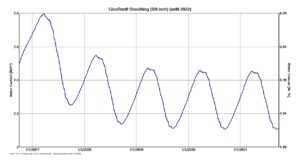
In addition to thermal performance modeling, BET utilizes WUFI and other hygrothermal analysis tools to evaluate heat and moisture transfer within building assemblies. This analysis allows us to assess condensation risk, drying potential, and long-term durability under varying environmental conditions.
By combining energy modeling with moisture performance evaluation, we provide a comprehensive understanding of how assemblies will perform – not only for compliance, but for longevity and resilience.